Processes
Most programs begin with a Behavioral Preference and a Personal Driving Forces assessment. Using an instrument to measure behavioral preferences provides a starting point for people to understand themselves so that they can begin to understand and adapt to others. Behavioral preference assessments should not be used to “explain” or “excuse” a person’s behavior.
Instead, these assessments provide a baseline from which each individual will understand how to adapt to fit the needs of others or a particular situation and that, in general, others’ communication toward them is not personal. Our communication and style are about us – our needs and reality- and the same is true when we interact with others.
While we can utilize assessments completed before our engagement, Dynamic Interactions prefers using tools published by Target Training International (TTI). These tools include the DISC Behaviors Report (also known as the Colors Report) and the Driving Forces Report (which reveals a person’s internal motivators or values), along with additional tools such as EQ, TriMetrix DNA (which includes three sciences – Behaviors, Driving Forces, and Competencies), Job Benchmarking, and more.
DISC Models
Interestingly, the DISC model has many “flavors” because it was never copyrighted. The concept was published in 1928 in the book “Emotions of Normal People”. In this book, William Moulton Marston stated that people illustrate their emotions using four behavior types:
- (D) Dominance (Red Behavioral Style)
- (I) Inducement (Yellow Behavioral Style)
- (S) Steadiness (Green Behavioral Style)
- (C) Compliance (Blue Behavioral Style)
Marston also argued that these behavioral styles resulted from people’s sense of self and interactions with the environment.
Remaining true to Marston’s observations, in 1984, TTI developed a DISC instrument that has since become a standard in the industry. It is published in 40 languages and used by over 7,000 consultants in 90 countries. For almost 40 years, TTI has researched and applied social and brain science to create behavioral assessments with the goal of transforming potential into productivity and performance.
Talent Insights examines the behaviors individuals bring to their jobs and the motivators that drive them.
The TTI DISC (Behaviors) instrument measures:
- (D) Dominance – how we handle problems and/or challenges. It relates to control, power, and assertiveness.
- (I) Influencing – how we interact with and/or try to influence others. It relates to social situations and communication.
- (S) Steadiness – how we pace ourselves and handle situations. It relates to patience, persistence, and thoughtfulness.
- (C) Compliance – how we react to rules set by others. It relates to structure and organization.
In addition, this report blends Behaviors and Driving Forces together in an integrated section that will help blend the “how” and the “why” of an individual’s actions. These reports consist of both sciences: Behaviors and Motivators.
The Behaviors section provides dialogue and graphs depicting an individual’s preferences in their Natural and Adapted states (what they perceive the environment requires of them at that time).
The Driving Forces section provides dialogue and graphs depicting an individual’s relationship with each Motivator. It is essential to understand that motivators are the windows through which an individual views the world, thus driving their behavior. They reveal why an individual acts a certain way. In the work environment, motivators are essential to job satisfaction and performance. Once these are made more apparent through assessment tools, motivators provide valuable insight into ourselves and our success. As part of the session, participants will learn how to engage others to ascertain their motivators, providing a greater opportunity for successful communication and interaction.
Also, in the Driving Forces section, we will measure whether an individual has a Strong, Situational, or Indifferent reaction in these six key areas:
- Knowledge – specifically, how a person values knowledge and learning. The two ends of this continuum are Instinctive and Intellectual.
- Utility – specifically, how a person values practicality, usefulness, and gaining a return on all investments of time, talent, and resources.
- Surroundings – precisely how the beauty and form in surroundings impact and influence their experience.
- Others – specifically, how a person values giving, being of service, and helping.
- Power – specifically, how a person values individuality, status, renown, and personal.
- Methodologies – This area addresses how individuals view structures and traditions and what approaches they prefer.
In addition to Beyond Behaviors and Driving Forces, additional sections are available upon request. Some of these include Competencies and EQ.
The standard process in client engagements is as follows:
Group Workshops/Programs – Dynamic Interactions works with the lead contact to establish goals and desired outcomes for the engagement. Engagements can be half-day, full-day, or multiple days and delivered over a specific period. While in-person engagements are most effective, Dynamic Interactions has mastered the art of virtual delivery, engaging all participants.
Individual Coaching – Dynamic Interactions works with a “sponsor,” otherwise identified as a corporate client wishing to provide individual employees coaching services. In this case, Dynamic Interactions provides two coaching agreements, one to the “sponsor” and one to the individual being coached, the “coachee”. Upon receiving the signed agreements, most coachees are provided with a link to the online questionnaire that generates their personal Behaviors and Driving Forces Report. When completed, the Coachee will automatically receive a copy of their report, with the expectation that they will review it. The report includes a 1.5-hour session to review the results before coaching begins. Coaching programs start at six sessions.
Group Coaching – starts with the same report for each individual in the group. The purpose and desired outcomes of group coaching will be discussed, thoroughly understood, and documented before sessions begin. Group coaching can include three up to ten individuals. The group will meet at a frequency of weekly or bi-weekly. Again, group coaching programs start with six sessions with the option of adding additional sessions if needed.
Conflict Resolution Coaching –is a specialized form of coaching that focuses on helping individuals and groups effectively navigate and resolve conflicts. Coachees are empowered to transform tensions and achieve positive outcomes in various interpersonal and professional situations by providing guidance, support, and strategies. It is typically structured with a coach and two individuals experiencing conflict. The Behaviors and Driving Forces Report is a requirement for each individual coachee.
In each type of coaching, a clear set of goals and desired outcomes is established prior to the program’s launch. This process involves the “sponsor” in a corporate engagement or establishing the goals of an individual in an engagement that is not under a “sponsor.”
Communicating in the Kitchen
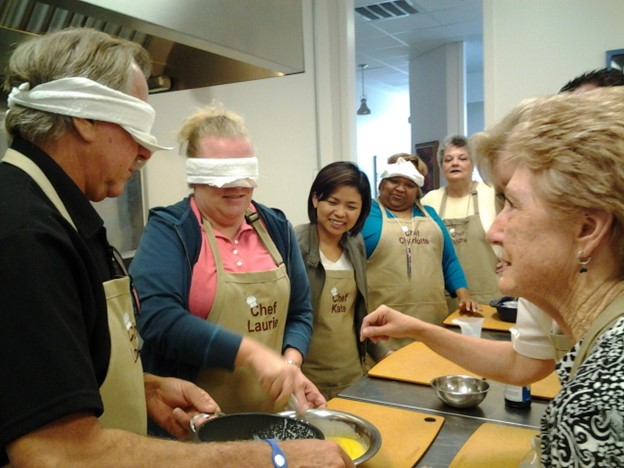
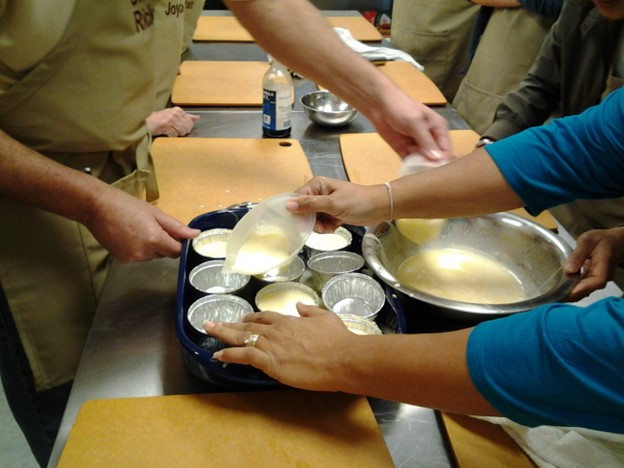
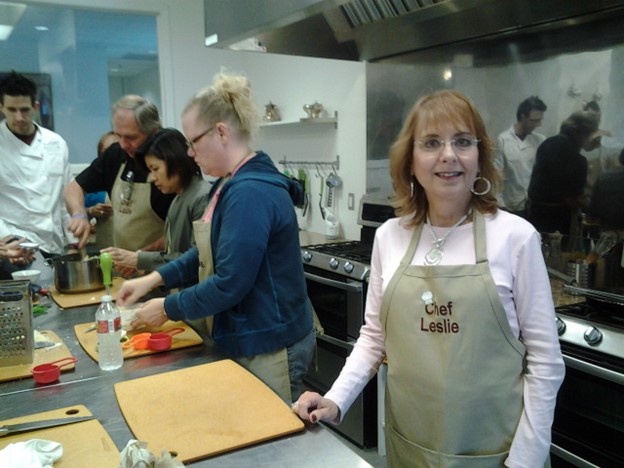
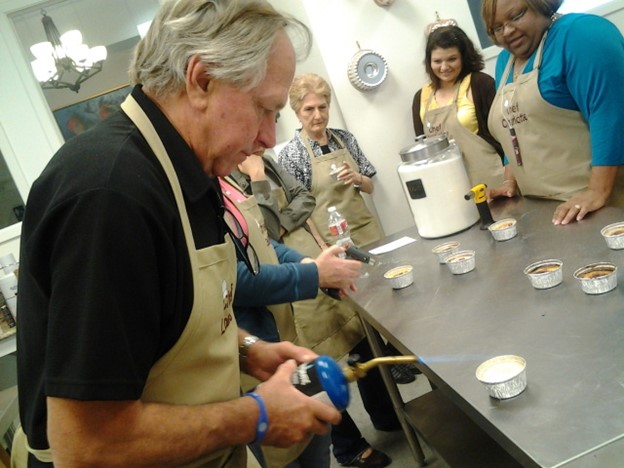
Imagine preparing Beef Wellington, perfectly roasted potatoes, and a delicate crème brûlée—but with a twist! In our recent Effective Communication Workshop, participants experienced the delicious challenge of creating gourmet dishes together in a commercial kitchen, guided by a professional chef. With the communication learning guided by Leslie of Dynamic Interactions.
Picture this: teams lined up on either side of the prep tables—half blindfolded, half fully sighted. The sighted participants had to give crystal-clear, precise instructions to their blindfolded partners, who executed tasks purely based on verbal guidance. Separating eggs became an adventure in clarity, trust, and active listening, underscoring just how essential precise communication is when achieving common goals.
Through laughter, trial, error, and triumph, each pair navigated the complexities of culinary teamwork, discovering firsthand how quickly misunderstandings can occur—and how rewarding effective communication truly is. At the end of this flavorful exercise, participants proudly enjoyed the delicious results of their teamwork.
This unforgettable workshop served up not only fantastic food but invaluable lessons in precise communication, demonstrating that clarity is key to team success. Bon appétit—and bon dialogue!
Piece by Piece: A Team Alignment Experience
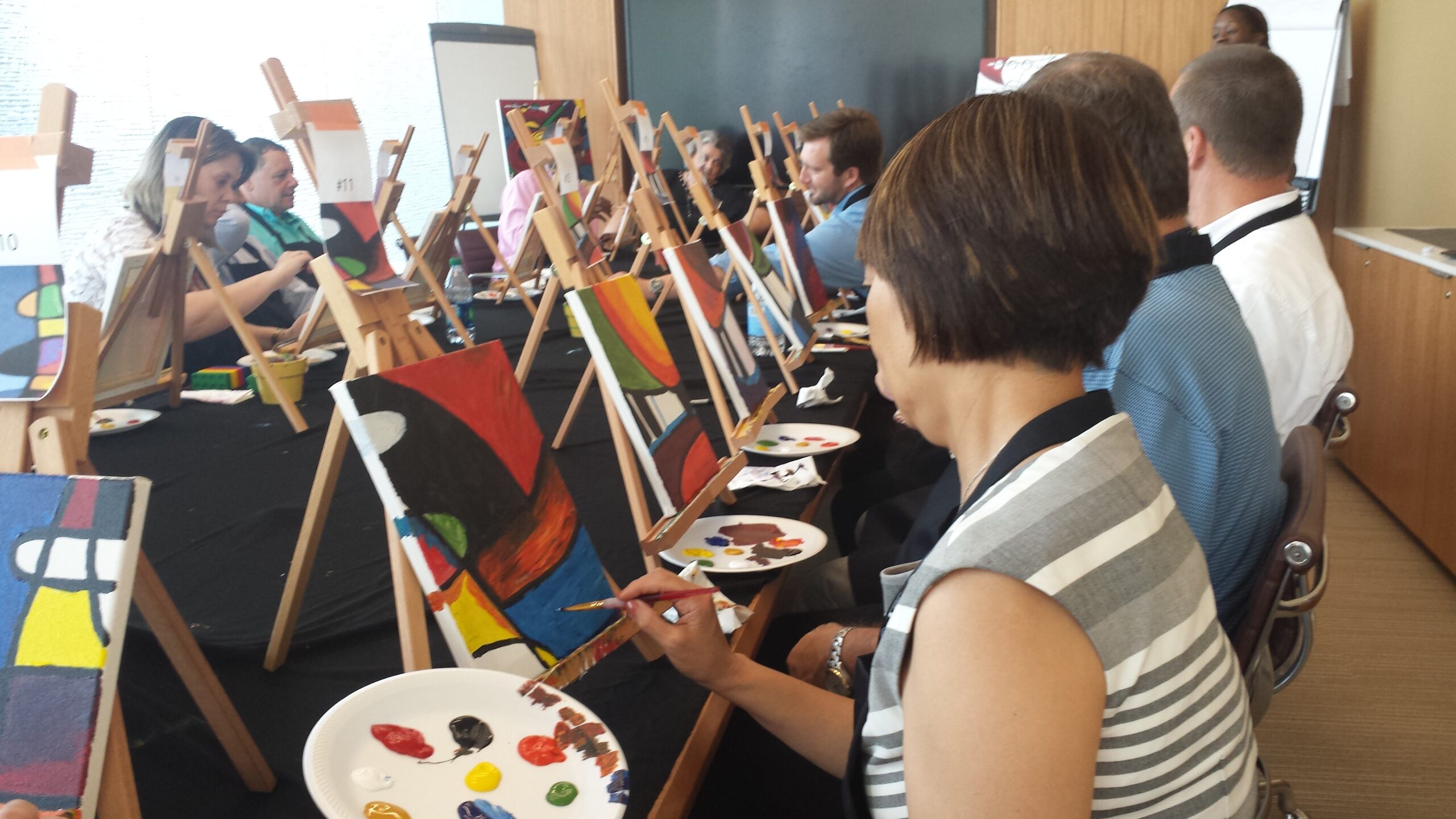
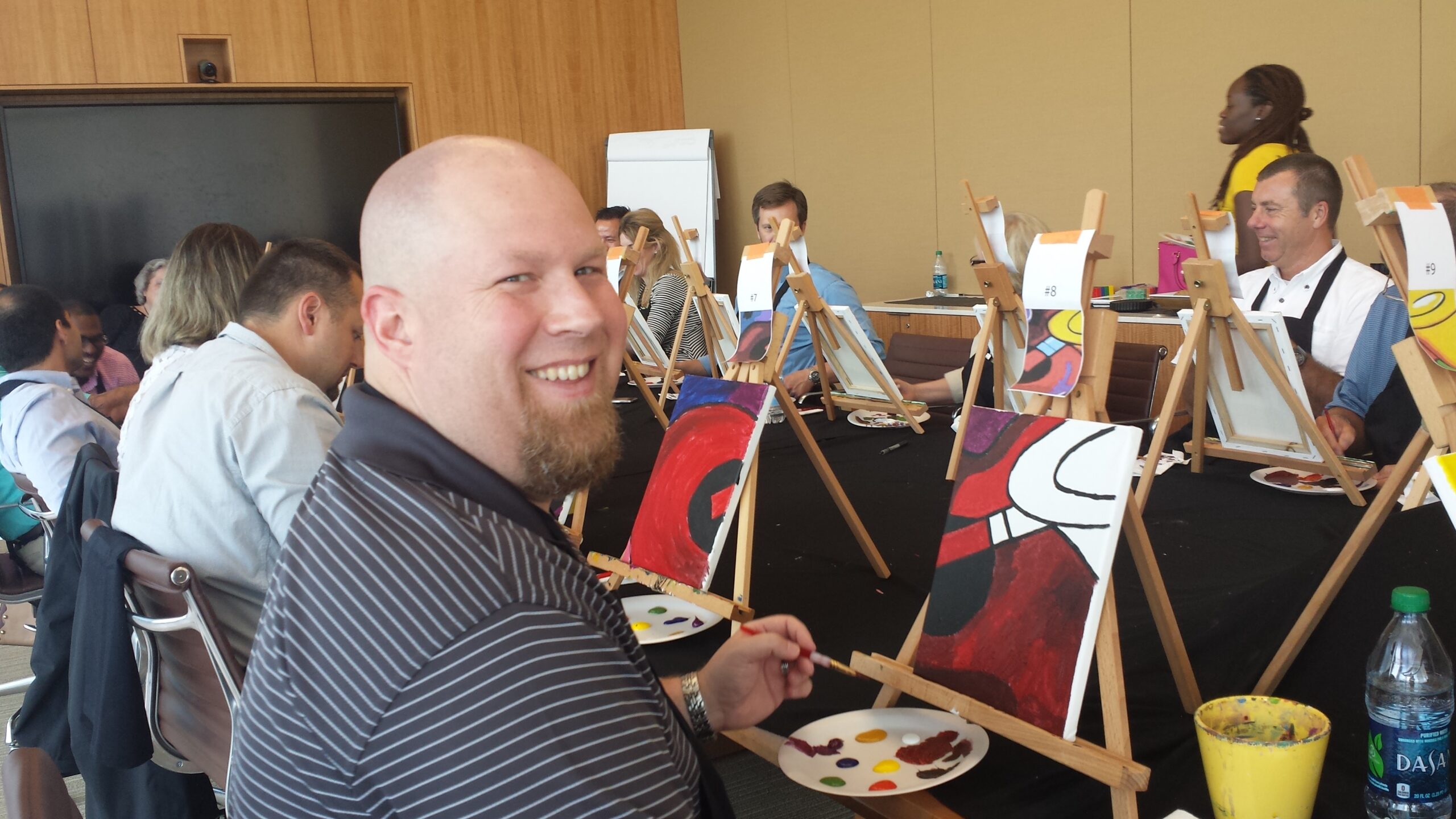
This isn’t your average paint-and-sip.
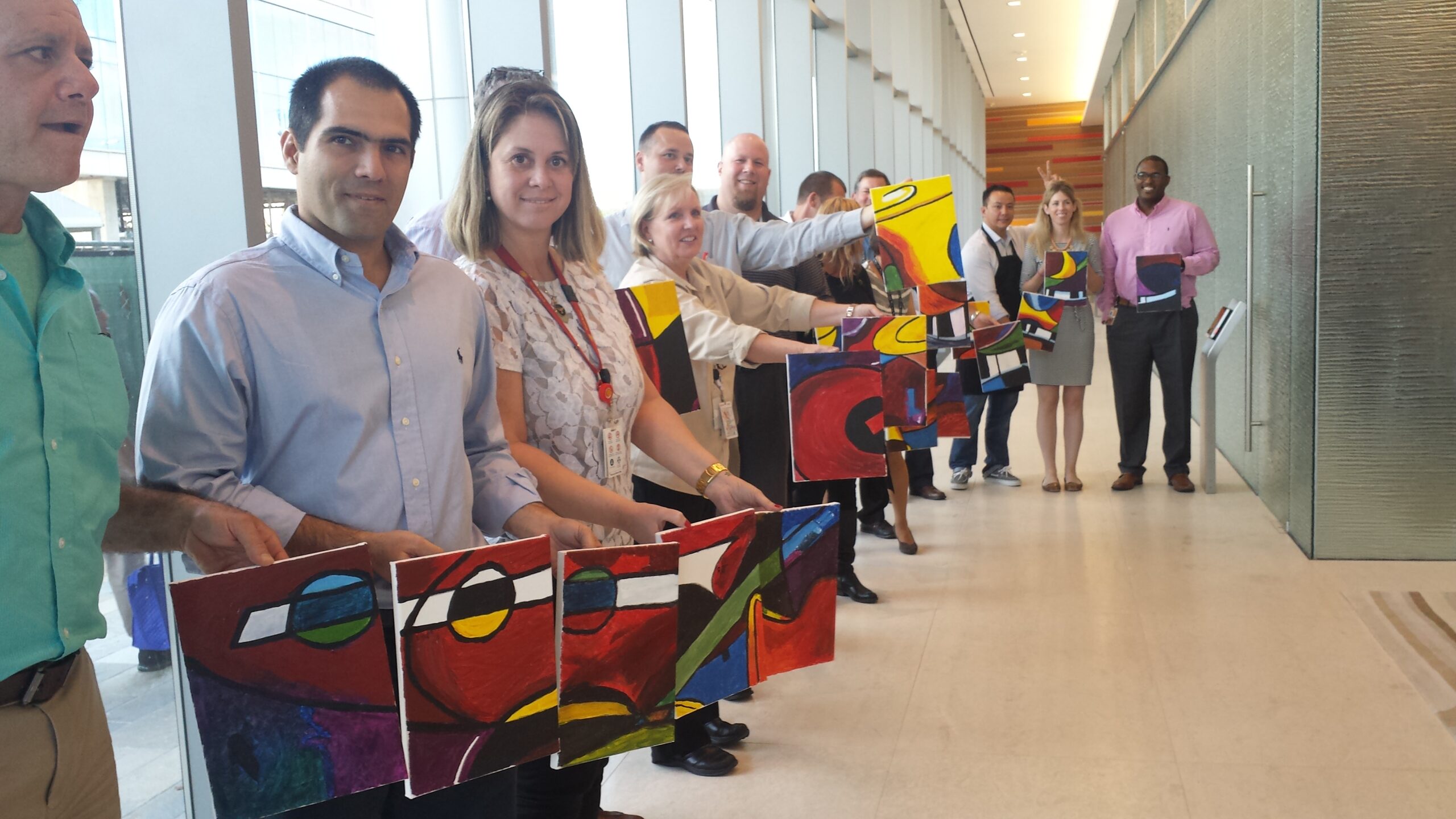
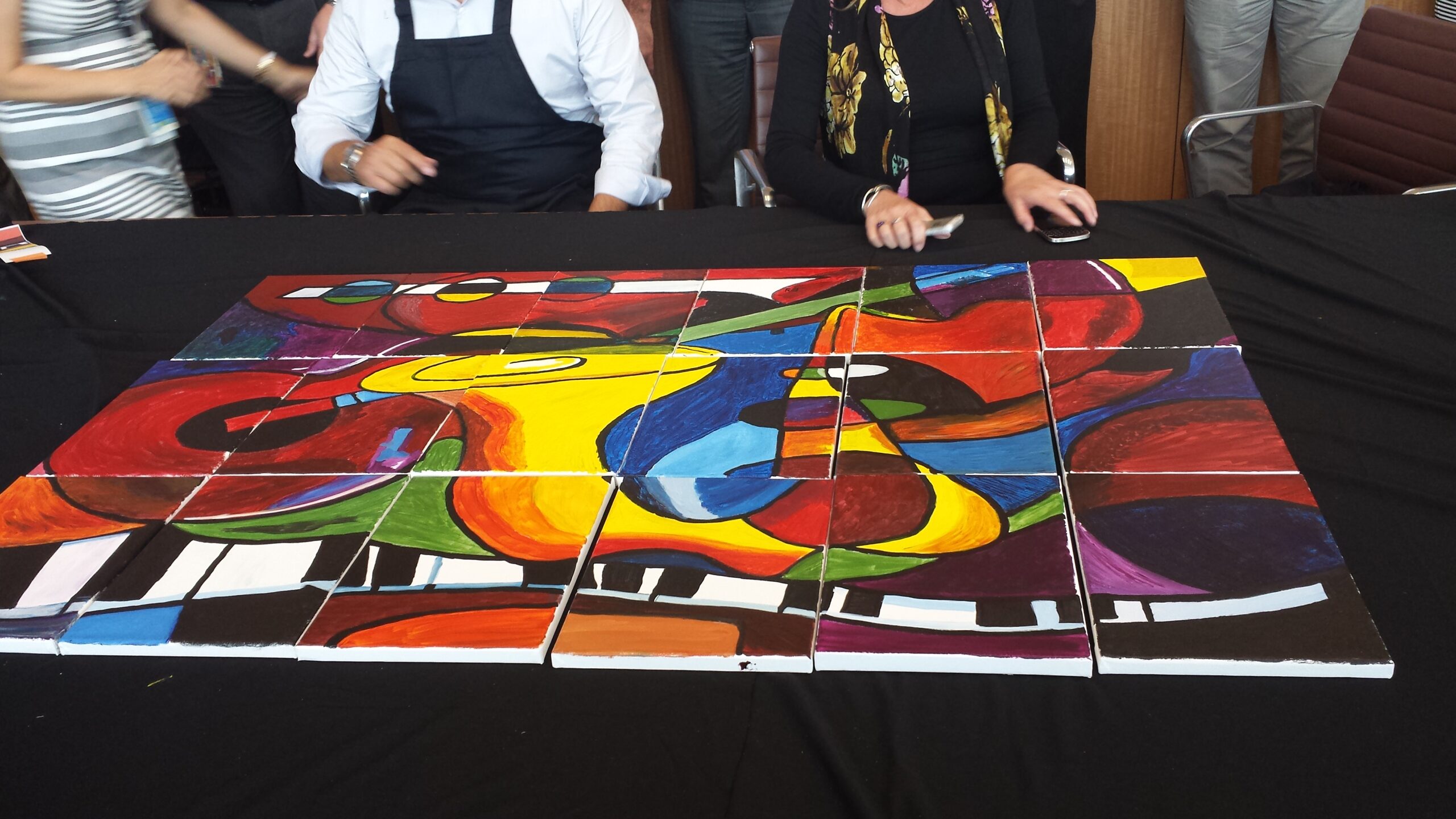
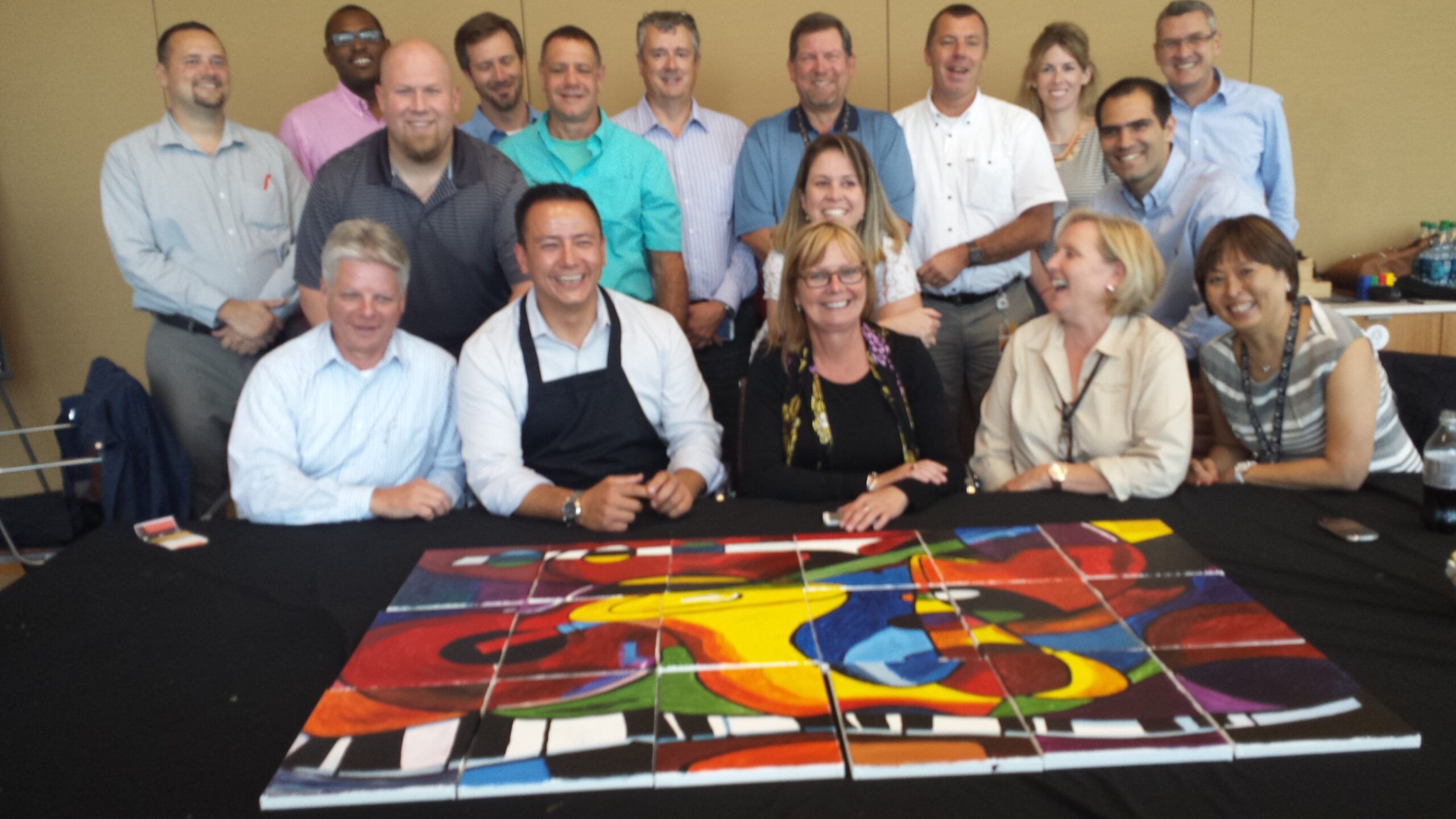
In this engaging and colorful team-building workshop, each participant is given a single canvas tile – one small section of a much larger image. Without seeing the final picture, they paint their portion with care, intention, and a touch of pride. But when all the tiles come together, a powerful metaphor for collaboration unfolds.
Suddenly, individual efforts form a unified masterpiece—and along the way, surprising insights emerge about trust, ownership, and the challenge of letting go. Midway through the activity, we introduce a slight twist that reveals how attached we become to “our” part, even when the team’s bigger picture is at stake.
This workshop is perfect for groups that need to strengthen communication, build trust, and embrace collaboration with more openness (and a splash of fun). This experience leaves your team with more than a work of art. It leaves them with a shared story.